
Creating a basic beef stock at home is an excellent way to add depth and flavor to your dishes. This recipe is straightforward and allows you to control the quality of the ingredients, resulting in a rich and flavorful stock that can be used in a variety of soups, stews, and sauces.
While most of the ingredients in this basic beef stock recipe are common, you might need to visit the supermarket for beef bones. These are typically found in the meat section or can be requested from the butcher. Additionally, tomato paste is a pantry staple for many, but if you don't have it on hand, it's easily found in the canned goods aisle.
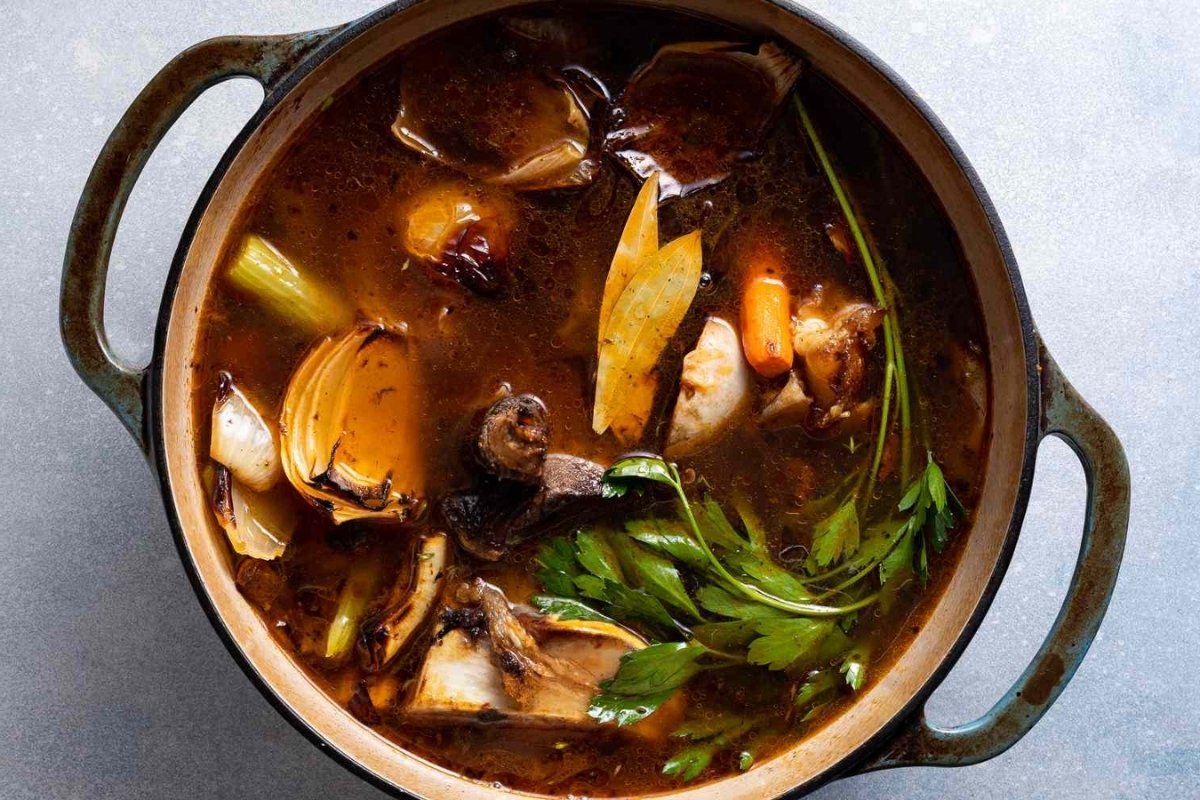
Ingredients For Basic Beef Stock Recipe
Beef bones: Provide the rich, meaty flavor and gelatinous texture essential for a good stock.
Onion: Adds sweetness and depth to the stock.
Carrots: Contribute sweetness and a subtle earthiness.
Celery: Adds a fresh, slightly peppery flavor.
Garlic: Enhances the overall flavor with its aromatic qualities.
Tomato paste: Adds a rich, umami flavor and deepens the color of the stock.
Water: The base liquid that extracts flavors from the ingredients.
Salt: Enhances the flavors of all the ingredients.
Black peppercorns: Adds a mild heat and complexity to the stock.
Bay leaves: Infuse the stock with a subtle, herbal aroma.
Technique Tip for Making Beef Stock
Roasting the beef bones before simmering them in water is a crucial step that enhances the depth of flavor in your beef stock. The caramelization that occurs during roasting adds a rich, complex taste to the final product. Make sure to spread the bones out in a single layer on the baking sheet to ensure even roasting. Additionally, when skimming off foam during simmering, use a fine-mesh strainer or a ladle to remove impurities, which will result in a clearer and more refined stock.
Suggested Side Dishes
Alternative Ingredients
beef bones - Substitute with chicken bones: Chicken bones can provide a similar depth of flavor and richness, though the taste will be lighter and less robust than beef.
onion - Substitute with leek: Leeks offer a milder, sweeter flavor compared to onions, but still add a good aromatic base to the stock.
carrots - Substitute with parsnips: Parsnips have a similar texture and sweetness to carrots, making them a good alternative for adding sweetness and body to the stock.
celery - Substitute with fennel: Fennel provides a slightly anise-like flavor which can add an interesting depth to the stock, though it is more aromatic than celery.
garlic - Substitute with shallots: Shallots offer a milder, sweeter flavor compared to garlic, but still contribute to the overall aromatic profile of the stock.
tomato paste - Substitute with soy sauce: Soy sauce can add umami and depth of flavor, though it will alter the color and add a slightly different taste profile.
water - Substitute with vegetable broth: Using vegetable broth instead of water can add additional layers of flavor to the stock.
salt - Substitute with soy sauce: Soy sauce can provide saltiness along with additional umami flavor, though it will also darken the stock.
black peppercorns - Substitute with white peppercorns: White peppercorns offer a similar heat and peppery flavor but are slightly milder and less pungent.
bay leaves - Substitute with thyme: Thyme provides a different but complementary herbal note that can add complexity to the stock.
Other Alternative Recipes Similar to Beef Stock
How to Store or Freeze This Recipe
- Allow the beef stock to cool completely before storing. This helps prevent condensation, which can dilute the stock and affect its flavor.
- Use airtight containers or heavy-duty freezer bags to store the stock. Make sure to leave some space at the top of the container or bag, as the liquid will expand when frozen.
- Label each container or bag with the date and contents. This will help you keep track of how long the stock has been stored and ensure you use the oldest stock first.
- For easy portioning, consider freezing the stock in ice cube trays. Once frozen, transfer the stock cubes to a freezer bag. This allows you to use small amounts as needed without defrosting an entire container.
- Store the stock in the refrigerator for up to 5 days. If you don't plan to use it within this time frame, freezing is the best option.
- When freezing, the stock can be kept for up to 6 months. Beyond this, the quality may start to degrade, although it will still be safe to use.
- To defrost, place the container or bag in the refrigerator overnight. For quicker defrosting, you can place the sealed bag in a bowl of cold water or use the defrost setting on your microwave.
- Once defrosted, bring the stock to a boil before using it in your soups, stews, or other recipes. This ensures any potential bacteria are killed.
- If you notice any off smells, discoloration, or mold, discard the stock. Proper storage should prevent these issues, but it's always better to be safe.
- For added convenience, consider dividing the stock into portions that match the quantities you typically use in recipes. This saves time and reduces waste.
How to Reheat Leftovers
- Pour the beef stock into a saucepan and heat over medium heat, stirring occasionally until it reaches a simmer. This method helps maintain the rich flavors and ensures even heating.
- For a quick reheat, use a microwave. Place the stock in a microwave-safe container, cover loosely, and heat on high for 2-3 minutes, stirring halfway through to ensure even heating.
- If you have a large quantity, consider using a slow cooker. Set it to low and let the stock warm up gradually over 1-2 hours. This method is perfect for maintaining the depth of flavor without rushing the process.
- For a more controlled reheating, use a double boiler. Place the stock in the top part of the double boiler and heat over simmering water. This gentle method prevents scorching and preserves the stock's quality.
- If you need to reheat and reduce the stock simultaneously, pour it into a large pot and bring it to a gentle boil over medium-high heat. Stir occasionally until it reaches the desired temperature and consistency.
Best Tools for Making Beef Stock
Baking sheet: Used to roast the beef bones in the oven, ensuring they develop a rich, deep flavor.
Large pot: Essential for holding all the ingredients and water, allowing them to simmer and extract flavors over several hours.
Fine-mesh strainer: Necessary for straining the stock to remove solids, resulting in a clear and smooth liquid.
Oven: Preheated to 400°F (200°C) to roast the beef bones, enhancing their flavor.
Stove: Used to bring the stock to a boil and then simmer it for several hours.
Knife: For chopping the carrots, celery, and quartering the onion.
Cutting board: Provides a safe surface for chopping vegetables and preparing ingredients.
Tongs: Handy for transferring the roasted bones from the baking sheet to the pot.
Skimmer: Useful for removing foam and impurities that rise to the surface during simmering.
Refrigerator: Used to cool the stock, allowing the fat to solidify on top for easy removal.
Spoon: For stirring the ingredients and skimming off foam during the simmering process.
How to Save Time on Making This Recipe
Roast in advance: Roast beef bones ahead of time and freeze them. This way, you can skip the roasting step when you're ready to make the stock.
Use a slow cooker: Instead of simmering on the stove, use a slow cooker to cook the stock overnight. This saves active cooking time and energy.
Pre-chop vegetables: Chop onion, carrots, and celery in bulk and store them in the freezer. This reduces prep time.
Batch cooking: Make a large batch of beef stock and freeze it in portions. This way, you have stock ready for future recipes.
Basic Beef Stock Recipe
Ingredients
Main Ingredients
- 2 lbs Beef bones
- 1 Onion, quartered
- 2 Carrots, chopped
- 2 stalks Celery, chopped
- 3 cloves Garlic, crushed
- 2 tablespoon Tomato paste
- 10 cups Water
- 2 teaspoon Salt
- 1 teaspoon Black peppercorns
- 2 Bay leaves
Instructions
- 1. Preheat oven to 400°F (200°C). Place beef bones on a baking sheet and roast for 30 minutes.
- 2. Transfer roasted bones to a large pot. Add remaining ingredients and bring to a boil.
- 3. Reduce heat and simmer for 4 hours, skimming off any foam.
- 4. Strain the stock through a fine-mesh strainer. Discard solids.
- 5. Let the stock cool, then refrigerate. Skim off any fat that solidifies on top before using.
Nutritional Value
Keywords
More Amazing Recipes to Try 🙂
- White Chicken Chili Recipe45 Minutes
- Watermelon Juice Recipe10 Minutes
- Quinoa Black Bean Burgers Recipe35 Minutes
- Vegetarian Chili Recipe1 Hours
- Blackened Chicken Recipe25 Minutes
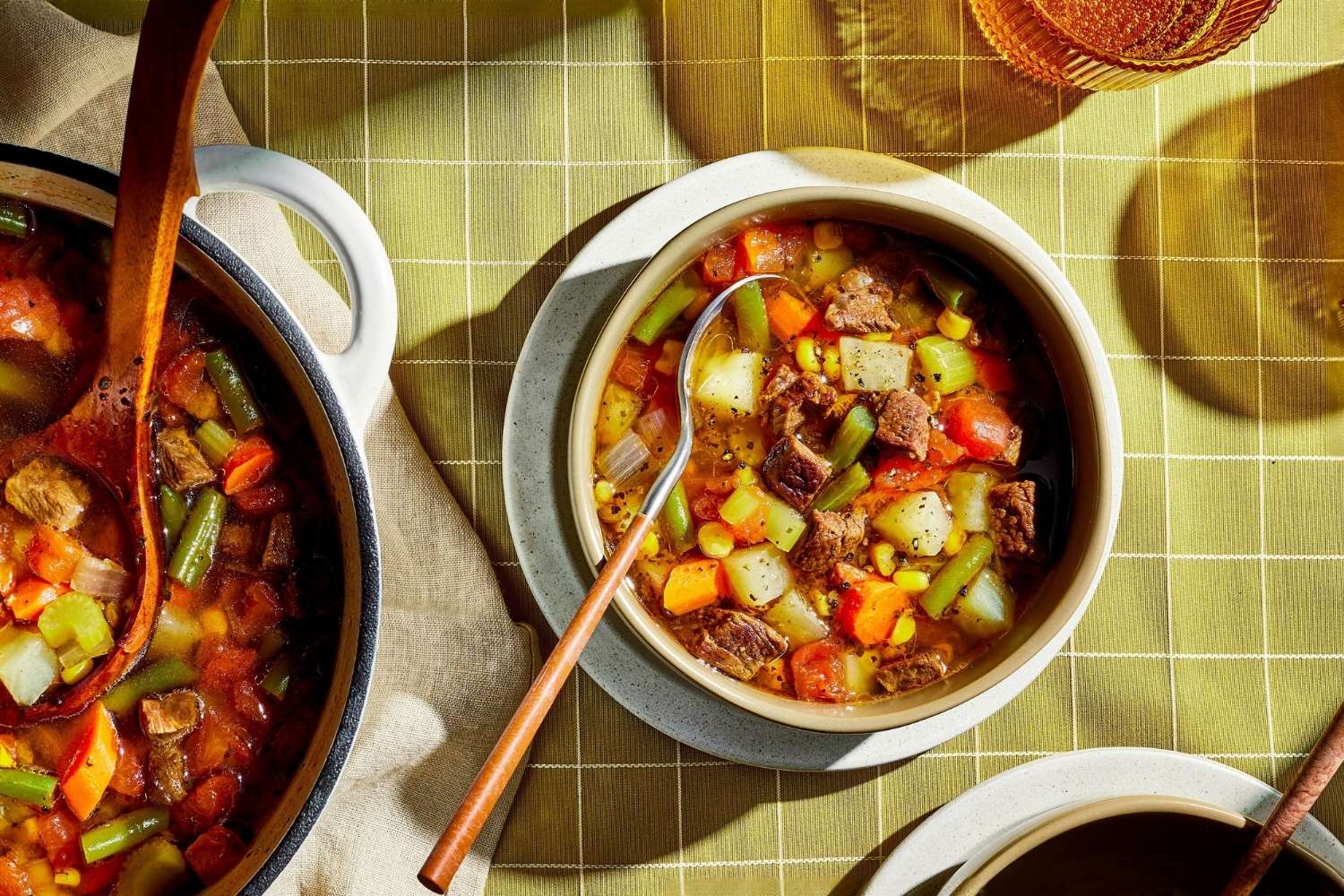
- Vegetable Beef Soup Recipe1 Hours 50 Minutes
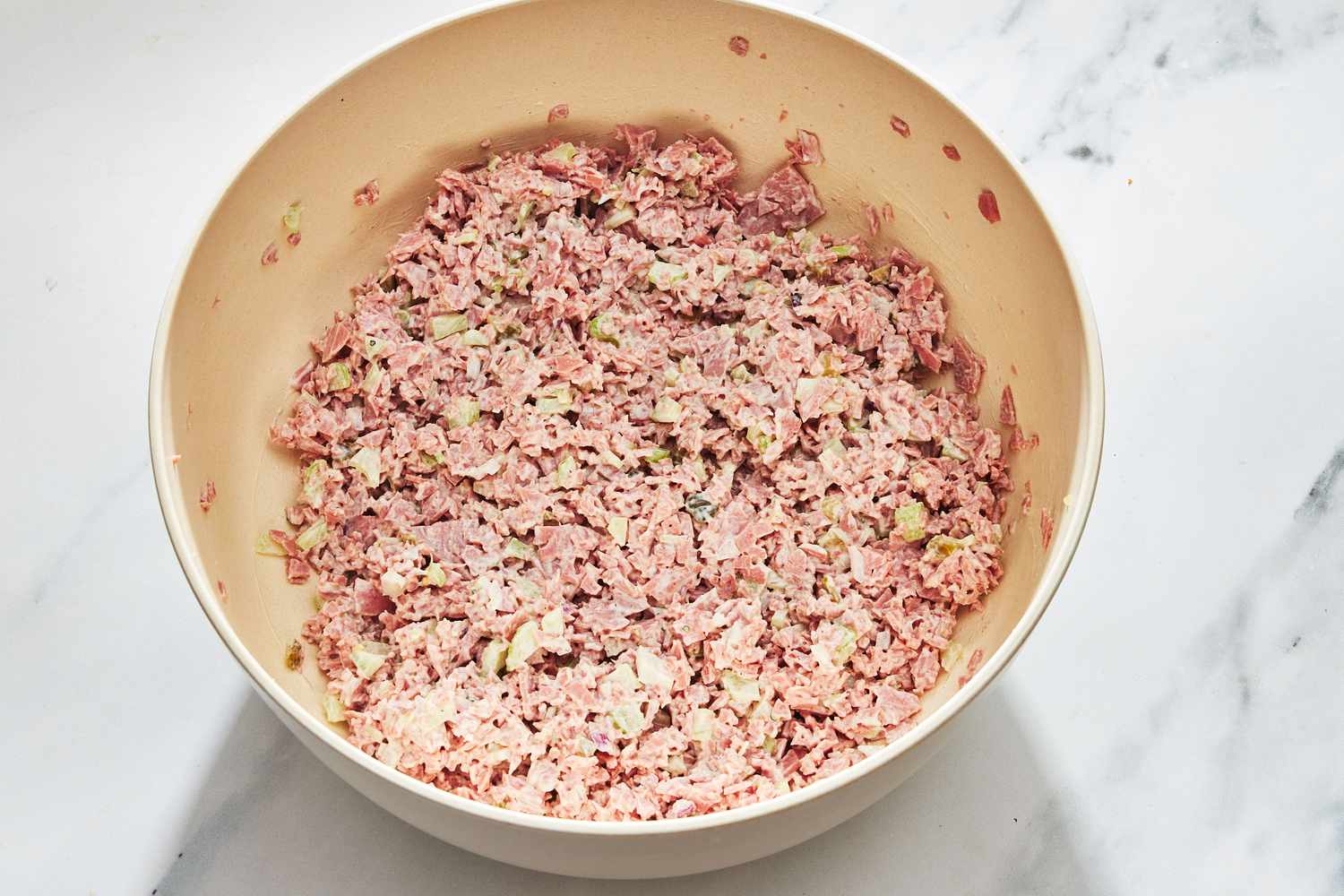
- Bologna Salad Sandwich Spread Recipe10 Minutes
- Cream of Chicken Soup Recipe45 Minutes










Leave a Reply