
This tomato basil soup is a comforting and flavorful dish that's perfect for any season. With its rich, velvety texture and the fresh taste of basil, it’s a delightful way to enjoy the bounty of summer or to warm up on a chilly day. Simple to make, yet deeply satisfying, this soup is sure to become a favorite in your household.
If you don't usually keep fresh basil leaves at home, you'll need to pick some up at the supermarket. Fresh basil adds a unique and aromatic flavor that dried basil simply can't match. Additionally, make sure you have vegetable broth on hand, as it forms the base of the soup and enhances the overall taste.
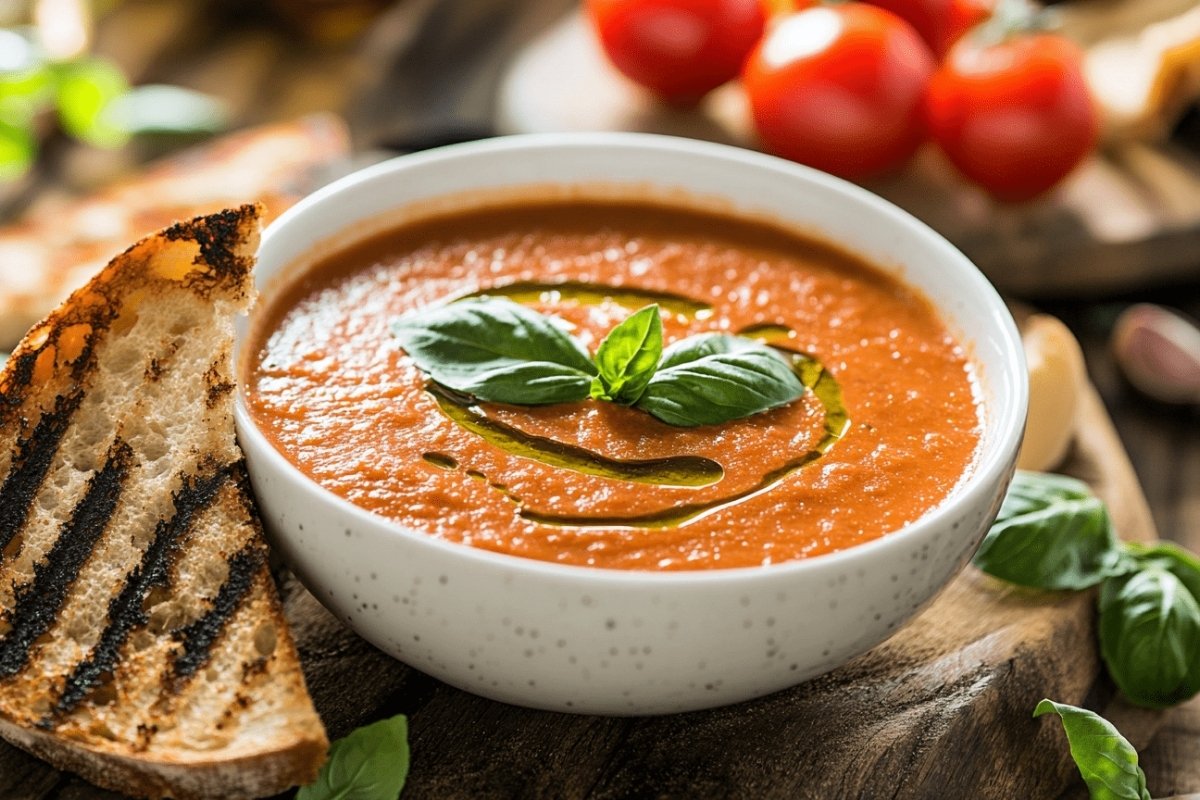
Ingredients For Tomato Basil Soup Recipe
Olive oil: Used for sautéing the onions and garlic, adding a rich flavor to the base of the soup.
Onion: Provides a sweet and savory depth to the soup when cooked until translucent.
Garlic: Adds a pungent and aromatic flavor that complements the tomatoes and basil.
Tomatoes: The star ingredient, giving the soup its vibrant color and fresh taste.
Vegetable broth: Forms the liquid base of the soup, enhancing the overall flavor.
Basil leaves: Fresh basil leaves add a fragrant and slightly sweet taste that elevates the soup.
Salt and pepper: Essential seasonings to enhance and balance the flavors of the soup.
Technique Tip for This Recipe
When sautéing the onion in olive oil, ensure it becomes fully translucent before adding the garlic. This step is crucial as it allows the onion to release its natural sweetness, which enhances the overall flavor of the soup. Additionally, when adding the fresh basil leaves at the end, do so off the heat to preserve their vibrant color and aromatic qualities.
Suggested Side Dishes
Alternative Ingredients
olive oil - Substitute with canola oil: Canola oil has a neutral flavor and a similar smoke point, making it a good alternative for sautéing.
olive oil - Substitute with butter: Butter adds a rich flavor and can be used for sautéing the onions and garlic.
onion - Substitute with shallots: Shallots have a milder and slightly sweeter flavor, which can add a subtle complexity to the soup.
onion - Substitute with leeks: Leeks offer a more delicate and sweet onion flavor, which can enhance the soup's taste.
garlic - Substitute with garlic powder: Garlic powder can be used in place of fresh garlic, though it will have a slightly different intensity and flavor profile.
garlic - Substitute with shallots: Shallots can provide a mild garlic-like flavor along with their onion notes.
tomatoes - Substitute with canned tomatoes: Canned tomatoes can be used when fresh tomatoes are not available, providing a similar texture and flavor.
tomatoes - Substitute with red bell peppers: Roasted red bell peppers can add a sweet and slightly smoky flavor, offering a different but delicious twist.
vegetable broth - Substitute with chicken broth: Chicken broth can be used if you are not strictly vegetarian, adding a rich and savory depth to the soup.
vegetable broth - Substitute with water with bouillon cubes: Bouillon cubes dissolved in water can mimic the flavor of vegetable broth.
fresh basil leaves - Substitute with dried basil: Dried basil can be used in place of fresh basil, though it will have a more concentrated flavor.
fresh basil leaves - Substitute with fresh spinach: Fresh spinach can add a different but complementary flavor and a similar green color to the soup.
salt - Substitute with soy sauce: Soy sauce can add a salty and umami flavor, enhancing the overall taste of the soup.
pepper - Substitute with white pepper: White pepper can provide a similar heat and flavor without altering the color of the soup.
Other Alternative Recipes Similar to This Soup
How to Store or Freeze This Soup
Allow the Tomato Basil Soup to cool to room temperature before storing. This helps prevent condensation, which can affect the texture and flavor.
Transfer the cooled soup into airtight containers. For easy portioning, consider using individual serving-sized containers.
If you plan to consume the soup within a few days, store it in the refrigerator. It will stay fresh for up to 4-5 days.
For longer storage, freeze the soup. Pour the soup into freezer-safe containers or heavy-duty freezer bags. Leave some space at the top, as the soup will expand when frozen.
Label the containers with the date and contents. This helps you keep track of how long the soup has been stored.
When ready to enjoy, thaw the soup in the refrigerator overnight if frozen. For a quicker option, you can use the defrost setting on your microwave.
Reheat the soup on the stovetop over medium heat, stirring occasionally until heated through. You can also reheat it in the microwave, stirring every minute to ensure even heating.
If the soup appears too thick after reheating, add a splash of vegetable broth or water to reach your desired consistency.
Garnish with fresh basil leaves or a drizzle of olive oil before serving to enhance the flavor and presentation.
How to Reheat Leftovers
Stovetop method: Pour the tomato basil soup into a pot. Heat over medium-low heat, stirring occasionally to ensure even heating. Once the soup is hot and steaming, it's ready to serve.
Microwave method: Transfer the soup to a microwave-safe bowl. Cover with a microwave-safe lid or plate to prevent splatters. Heat on high for 2-3 minutes, stirring halfway through. Continue heating in 30-second intervals until the soup is hot.
Double boiler method: Fill a larger pot with water and bring it to a simmer. Place a smaller pot or heatproof bowl with the tomato basil soup over the simmering water. Stir occasionally until the soup is heated through.
Slow cooker method: Pour the soup into a slow cooker. Set it to low and heat for 1-2 hours, stirring occasionally. This method is great for keeping the soup warm for extended periods.
Oven method: Preheat your oven to 350°F (175°C). Pour the tomato basil soup into an oven-safe dish and cover with aluminum foil. Heat for about 20-30 minutes, stirring halfway through, until the soup is hot.
Best Tools for This Recipe
Pot: Used to heat the olive oil, cook the onions, garlic, tomatoes, and vegetable broth.
Wooden spoon: Ideal for stirring the onions, garlic, and soup mixture.
Knife: Essential for chopping the onion and tomatoes, and mincing the garlic.
Cutting board: Provides a safe surface for chopping the vegetables and mincing the garlic.
Blender: Used to puree the soup until smooth after adding the fresh basil leaves.
Measuring spoons: Needed to measure out the olive oil.
Measuring cups: Used to measure the vegetable broth and chopped tomatoes.
Ladle: Handy for serving the hot soup into bowls.
Bowls: Used to serve the finished tomato basil soup.
How to Save Time on Making This Soup
Use canned tomatoes: Substitute fresh tomatoes with high-quality canned tomatoes to save chopping time.
Pre-chopped onions: Buy pre-chopped onions to skip the dicing step.
Garlic paste: Use garlic paste instead of mincing fresh garlic.
Immersion blender: Use an immersion blender directly in the pot to puree the soup without transferring it to a blender.
Pre-made broth: Use store-bought vegetable broth to avoid making it from scratch.
Tomato Basil Soup
Ingredients
Main Ingredients
- 2 tablespoon Olive oil
- 1 medium Onion, chopped
- 2 cloves Garlic, minced
- 4 cups Tomatoes, chopped
- 2 cups Vegetable broth
- 1 cup Fresh basil leaves
- to taste Salt and pepper
Instructions
- Heat olive oil in a pot over medium heat. Add chopped onion and cook until translucent.
- Add minced garlic and cook for another minute.
- Add chopped tomatoes and vegetable broth. Bring to a boil, then reduce heat and simmer for 20 minutes.
- Remove from heat and add fresh basil leaves. Use a blender to puree the soup until smooth.
- Season with salt and pepper to taste. Serve hot.
Nutritional Value
Keywords
More Amazing Recipes to Try 🙂
- Oven Fried Chicken Recipe1 Hours
- Pink Lemonade Recipe10 Minutes
- Manicotti Recipe1 Hours
- Curried Egg Sandwiches Recipe20 Minutes
- Ramen Noodle Soup Recipe30 Minutes
- Air Fryer Potato Wedges Recipe30 Minutes
- Slow Cooker Ham and Bean Soup Recipe8 Hours 15 Minutes
- Crab Salad Recipe15 Minutes







Leave a Reply